The Great Divorce: Macron Warns Europe Must Prepare for a World Without a Reliable America… habibi
This is not merely the rhetoric of a frustrated ally. It is a diagnostic assessment of a breakdown in the transatlantic relationship that has lasted for three-quarters of a century. Macron’s warning is clear: “Europe needs to wake up because America is unreliable as an ally”.
The Breakdown of Alliance Behavior
The catalyst for this radical shift in perspective is the perceived unpredictability of American foreign policy. For decades, Europe’s threat model was binary: Russia represented the kinetic, military threat, while China represented the economic challenge. Now, a third category has been added: the United States as a reliability problem.
Macron’s diagnosis stems from a pattern of unilateral American actions. The U.S. has recently launched military operations in the Middle East—specifically against Iran—without consulting its European allies. When those allies, such as France, declined to provide logistical support or allow military overflights, they were publicly lambasted by American leadership. From a European perspective, this is no longer the behavior of an alliance; it is coercion.
Building Parallel Capacity: The Hormuz Coalition
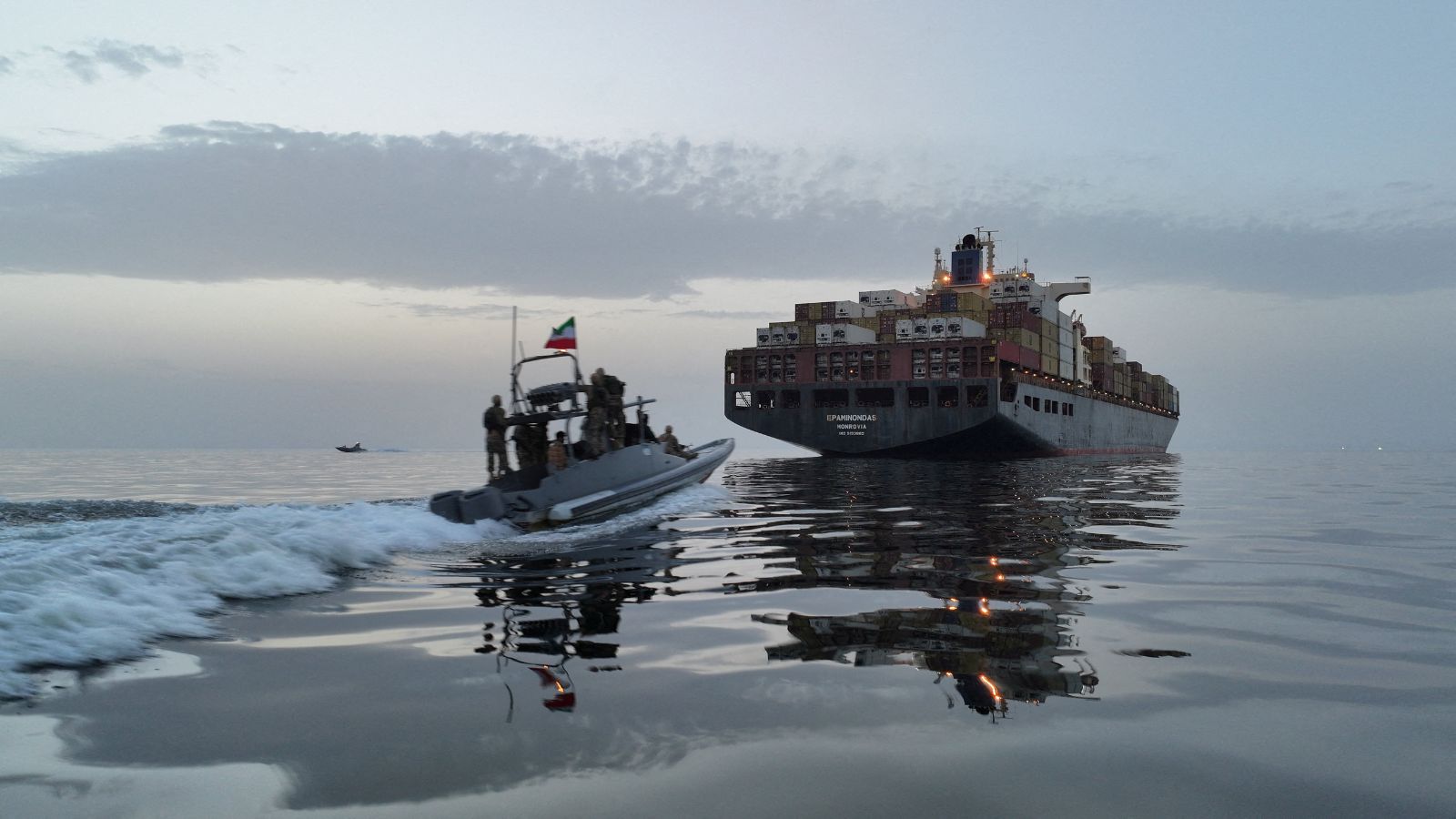
Nowhere is this decoupling more evident than in the Strait of Hormuz. In response to the global energy crisis sparked by the U.S.-Iran conflict, over 40 countries met in Paris to finalize a European-led coalition to reopen the vital waterway. Crucially, this mission—led by France and the United Kingdom—explicitly excludes the United States.
French officials have been blunt: American participation would make the operation less acceptable to Iran and would likely escalate the conflict rather than solve it. Italy, Britain, Belgium, and the Netherlands are now contributing mine-clearing capabilities to manage this global choke point independently. This represents a historic precedent: Europe is now coordinating critical maritime infrastructure security to solve a crisis that it believes U.S. policy created.

The Shift in Nuclear and Financial Architectures
The drive for “strategic autonomy” is extending into the most sensitive areas of national defense. France and Poland are currently discussing joint exercises that include elements of nuclear deterrence. With France possessing approximately 300 nuclear warheads and Britain 225, a coordinated European nuclear umbrella—though smaller than Russia’s—is being viewed as a credible, independent alternative to the American “extended deterrence” guarantees that are no longer seen as ironclad.
Financially, the EU is moving to structure massive loan packages—such as a 90 billion euro package for Ukraine—without requiring U.S. participation or approval. Polish Prime Minister Donald Tusk has echoed Macron’s concerns, questioning U.S. loyalty and warning that the threat from Russia is “months, not years away”.
The End of American Leverage?
For American strategic planners, these developments present a novel and permanent problem. Every time Europe replicates a capability that was previously dependent on U.S. assets—whether it is naval logistics, satellite surveillance, or nuclear deterrence—Washington permanently loses leverage.
A symbolic victory for this movement occurred recently when NATO opted for a Swedish-made surveillance aircraft over a Boeing model, marking the first time in 40 years that the American aerospace giant lost such a deal to a European competitor. This pattern of allies walking away from U.S. suppliers in favor of homegrown technology is accelerating.
The Road Ahead: A New G7?
Looking forward, the G7 summit in June, hosted by Macron in Évian, is expected to be a major battlefield for global governance. Macron has invited leaders from India and Brazil, aiming to return the forum to a dialogue focused on eliminating global imbalances rather than serving as an extension of American leadership.
The sequence of events is now clear. Europe will continue to build “redundancy” across defense, energy, and finance. They are not necessarily breaking with America formally, but they are operating under the assumption that they can no longer rely on American consistency. As Macron pointed out, for 75 years, Europe organized its entire security apparatus around the assumption that America would show up. Today, that assumption is being replaced by a new imperative: “alone if necessary”.