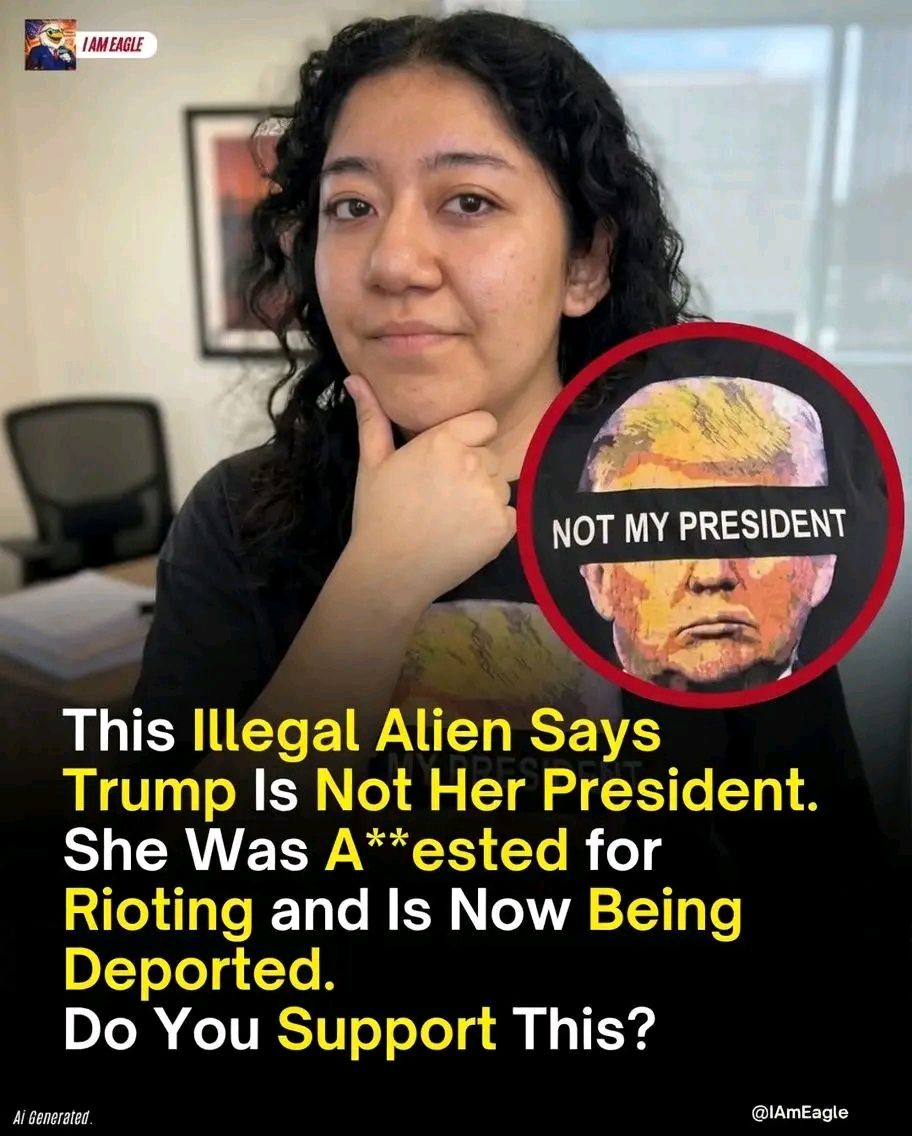
Should Non-Citizens Involved in Violent Riots Face Deportation? America’s Immigration Debate Intensifies
Should Non-Citizens Involved in Violent Riots Face Deportation? America’s Immigration Debate Intensifies
The national conversation surrounding immigration, public safety, and civil unrest has become one of the most emotionally charged and politically divisive issues in modern America. Across social media platforms, political debates, television networks, and family dinner tables, millions of Americans continue asking difficult questions about what responsibilities come with living in the United States — especially for non-citizens.
At the center of the controversy is a growing debate over whether non-citizens who participate in violent riots, attacks on law enforcement, or large-scale property destruction should face deportation.
Supporters of stricter immigration enforcement argue that entering or residing in the United States carries an obligation to respect the nation’s laws and institutions. Critics, however, warn that emotional political rhetoric can blur the line between peaceful protest, criminal activity, immigration policy, and constitutional rights.
As political tensions continue rising nationwide, the issue has evolved into far more than just an immigration debate. It now touches on:
- National identity
- Public safety
- Civil liberties
- Freedom of protest
- Rule of law
- Political polarization
- The meaning of citizenship itself
The Growing Tension Around Civil Unrest
Over the past several years, the United States has witnessed waves of protests connected to:
- Police reform
- Immigration policy
- Elections
- International conflicts
- Economic frustration
- Cultural divisions
Many demonstrations have remained peaceful, protected under the constitutional rights of free speech and assembly.
However, some protests have escalated into:
- Rioting
- Looting
- Arson
- Assaults
- Clashes with police
- Destruction of businesses and property
These incidents have intensified public concern about how governments should respond to violent unrest — especially when individuals involved are not American citizens.
The Core Question Fueling Debate
The central issue dividing Americans is relatively simple but politically explosive:
Should non-citizens who engage in violent criminal behavior during riots lose the privilege of remaining in the United States?
For supporters of deportation policies, the answer is clear.
They argue that:
- Immigration is a privilege, not a right
- Violent criminal acts violate public trust
- The government has a duty to protect citizens first
- Participation in riots demonstrates disregard for American law
Many believe non-citizens who commit serious crimes should face:
- Arrest
- Criminal prosecution
- Immigration review
- Potential removal from the country
Supporters often frame the issue as one of accountability and national sovereignty.
Critics Warn About Oversimplification
Opponents of aggressive deportation proposals argue the issue is far more complicated.
Civil rights advocates warn that emotional political rhetoric can:
- Encourage discrimination
- Threaten due process rights
- Blur distinctions between peaceful protest and violence
- Create fear within immigrant communities
Critics emphasize that constitutional protections apply broadly to individuals inside the United States, including many non-citizens.
They also caution that governments must avoid:
- Collective punishment
- Politically motivated enforcement
- Misidentifying protesters
- Targeting individuals unfairly
Some fear broad deportation rhetoric could discourage lawful immigrants from exercising free speech rights out of fear of retaliation.
Peaceful Protest vs Violent Crime
One of the most important distinctions in the debate involves separating peaceful protest from violent criminal activity.
Most Americans — across political lines — support the constitutional right to:
- Peaceful assembly
- Political protest
- Public demonstration
- Freedom of expression
The controversy intensifies when demonstrations shift into:
- Violence
- Property destruction
- Physical assaults
- Organized unrest
Even then, disagreements remain over:
- Definitions of rioting
- Police response
- Political bias in enforcement
- Media framing of events
These disagreements often become deeply partisan.
Immigration Law and Criminal Conduct
Under existing U.S. immigration law, certain criminal offenses can already lead to deportation proceedings for non-citizens.
Depending on immigration status and the severity of the offense, crimes involving:
- Violence
- Weapons
- Drug trafficking
- Property destruction
- Assault on law enforcement
may affect:
- Visas
- Residency status
- Green card eligibility
- Asylum claims
- Naturalization opportunities
However, deportation processes are legally complex and typically involve:
- Immigration courts
- Due process protections
- Criminal convictions
- Administrative review
The political debate often focuses on whether these systems should become stricter or faster.
Public Safety Concerns
Supporters of stronger deportation policies argue public safety should remain the government’s top priority.
Many Americans express concern over:
- Rising urban violence
- Organized unrest
- Attacks on police officers
- Destruction of businesses
- Fear within communities
Some believe violent riots undermine:
- Social stability
- Economic security
- Trust in institutions
For these voters, deportation becomes part of a broader law-and-order philosophy emphasizing:
- Consequences for criminal behavior
- National security
- Respect for legal systems
Immigration and National Identity
The debate also reflects broader anxieties about national identity and belonging.
Questions frequently raised include:
- What obligations come with living in America?
- What does citizenship mean?
- Should non-citizens receive the same protections?
- How should the country balance openness with security?
For many Americans, immigration discussions are deeply emotional because they connect to:
- Patriotism
- Cultural identity
- Economic fears
- Historical values
- Political ideology
These emotional layers help explain why immigration debates often become so intense.
Political Polarization Intensifies Everything
Modern American politics has become increasingly polarized, making compromise on immigration issues especially difficult.
Conservative voices often emphasize:
- Border security
- Crime prevention
- Immigration enforcement
- National sovereignty
Progressive voices more frequently focus on:
- Civil rights
- Humanitarian concerns
- Due process
- Protection against discrimination
As a result, the same event may be interpreted completely differently depending on political perspective.
One side may see:
- Dangerous criminal behavior
while another sees:
- Overreach and political scapegoating
Social Media Amplifies Emotional Reactions
Social media has dramatically intensified immigration debates by rewarding emotional and divisive content.
Videos involving:
- Riots
- Police confrontations
- Arrests
- Protest violence
spread rapidly online because they trigger:
- Fear
- Anger
- Tribal political reactions
- Outrage
Algorithms often amplify the most emotionally charged narratives, which can distort public perception.
Short clips without context frequently fuel:
- Misinformation
- Oversimplified conclusions
- Political hostility
Historical Context of Immigration Tensions
Immigration debates are not new in American history.
For generations, the United States has wrestled with tensions involving:
- Assimilation
- Labor competition
- National security
- Cultural identity
- Civil rights
Different immigrant groups throughout history have faced periods of suspicion and political backlash during times of:
- Economic uncertainty
- Social unrest
- War
- Political instability
Today’s debates reflect many of those same historical anxieties, now amplified by modern media and political polarization.
Law Enforcement Challenges
Police and federal authorities often face enormous challenges during large-scale protests and riots.
Distinguishing between:
- Peaceful demonstrators
- Opportunistic criminals
- Organized agitators
- Bystanders
can become extremely difficult during chaotic situations.
Law enforcement agencies must balance:
- Public safety
- Constitutional rights
- Crowd control
- Political pressure
- Media scrutiny
Mistakes or excessive force during protests can quickly escalate tensions further.
The Human Side of the Debate
Lost within many political arguments are the real human lives involved.
Immigrant communities often include:
- Families
- Workers
- Students
- Refugees
- Long-term residents
Many immigrants strongly support law enforcement and public safety while also fearing broad political rhetoric that paints entire communities negatively.
At the same time, victims of riots and violent unrest — including small business owners and injured officers — often feel their suffering receives insufficient attention.
Both realities exist simultaneously.
The Role of Citizenship
Citizenship remains one of the most emotionally powerful concepts in politics.
For some Americans, citizenship represents:
- Shared responsibility
- Loyalty
- Legal accountability
- Civic participation
The debate over deportation frequently centers on whether non-citizens who commit violent acts have violated the conditions of remaining in the country.
Others argue human rights and legal protections must still apply regardless of immigration status.
This tension sits at the heart of the national argument.
Media Framing Shapes Public Opinion
How media outlets describe protests and riots significantly affects public perception.
Different outlets may frame the same event as:
- A protest
- A riot
- A civil rights demonstration
- Violent extremism
- Political unrest
Language strongly influences emotional reaction.
This contributes to growing distrust between political groups who increasingly consume entirely different media ecosystems.
The Future of the Debate
As immigration remains central to upcoming elections and political battles, debates over deportation and public safety are likely to intensify further.
Future policy discussions may involve:
- Stricter immigration enforcement
- Faster deportation procedures
- Expanded legal protections
- Protest-related criminal laws
- Border security reforms
The challenge for policymakers will be balancing:
- Public safety
- Constitutional rights
- Human dignity
- National sovereignty
- Fair legal process
Final Thoughts
The debate over whether non-citizens involved in violent riots should face deportation reflects much larger questions about law, identity, freedom, and responsibility in modern America.
For some, the issue is fundamentally about protecting public safety and maintaining respect for the rule of law.
For others, it raises concerns about civil liberties, fairness, and the dangers of emotionally driven political enforcement.
Like many of today’s most divisive national conversations, the argument is fueled not only by policy disagreements but also by deeper fears and competing visions of what America should represent.
And in a country increasingly divided over politics, immigration, and social unrest, those questions are unlikely to disappear anytime soon.