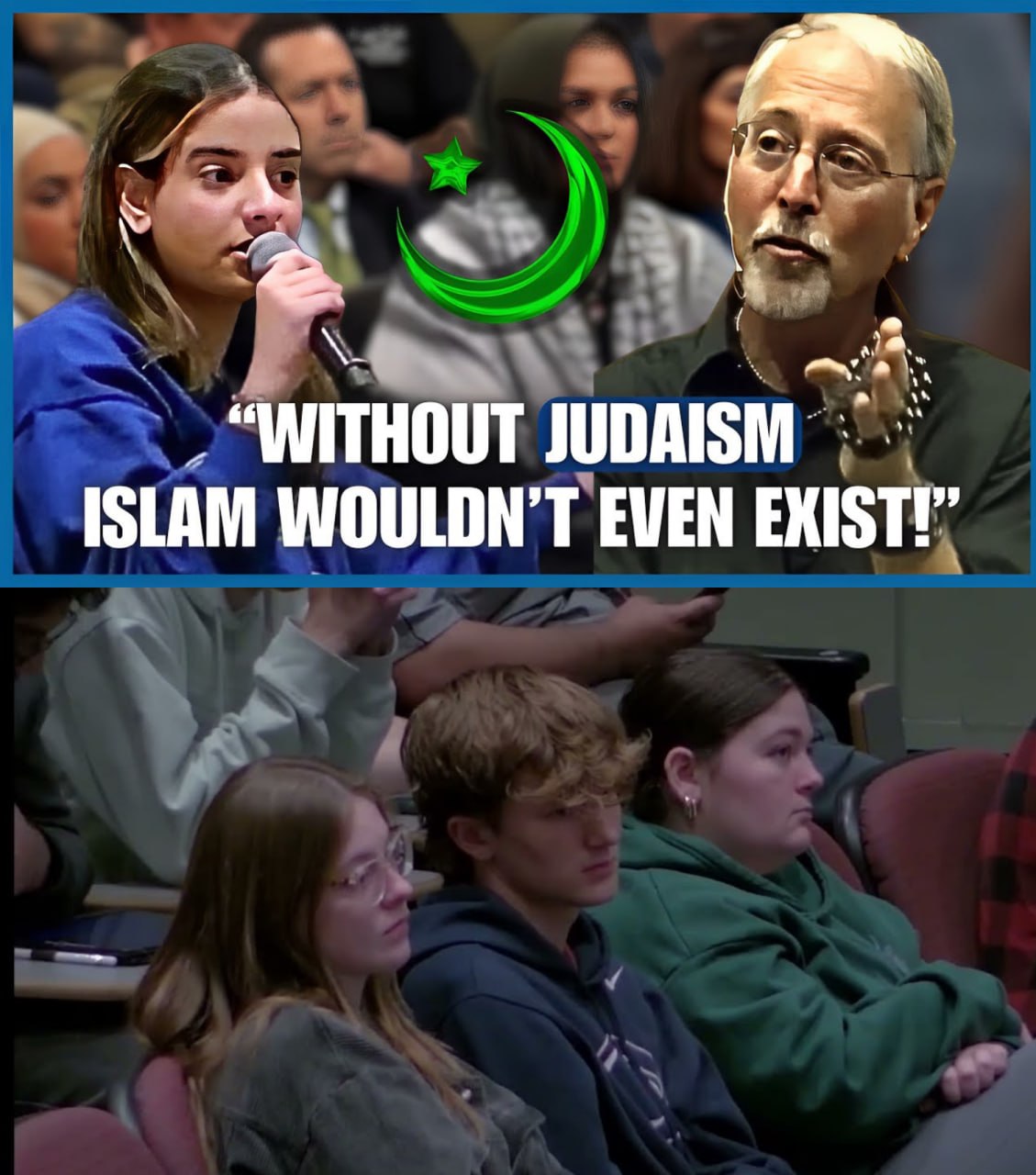
The Reality Check: Professor Shuts Down Student Propaganda with a Striking Truth About Global Anti-Semitism
In a viral classroom moment, a sociology professor challenges the misinformation surrounding the Israeli-Palestinian conflict. By sharing a startling personal anecdote from the Amazon, he exposes the pervasive, irrational nature of anti-semitism and warns students against forming rigid opinions based on unchecked influencer propaganda.
In an era where global conflicts are reduced to 30-second clips on social media and curated feeds, the classroom has become a battleground for truth. Recently, a sociologist and professor offered a sobering reality check to his students, dismantling the superficial understanding that many young people hold regarding the Middle East and the disturbing persistence of anti-semitism.
The Dangers of Influencer-Driven Opinion
The professor began by addressing the elephant in the room: the way many young people formulate their political stances. He noted that students are increasingly mobilized by celebrities and influencers on Instagram, often siding with movements or causes they have not thoroughly researched.
“They don’t yet have the maturity, the experience of life to understand that not everything that’s presented to them is the way it is,” the professor explained. He highlighted the stark contrast in media narratives—citing the polarized coverage between outlets like Sky News and Al Jazeera—and argued that this lack of verified research is leading students to adopt biases without understanding the full historical or human context of the conflict.
The Jungle Anecdote: Anti-Semitism Without Borders
Perhaps the most striking moment of the lecture occurred when the professor shared a personal story that left his students in silence. He recounted a trip to the Amazon jungle, where he visited a village of Schwar Indians—an indigenous group known for a history of head-hunting.
When he introduced himself as “Samuel,” the villagers asked if he was Jewish. When he answered “no,” they responded with, “Gracias a Dios” (Thank God).
The professor was stunned. These villagers lived in the middle of the jungle; they had no connection to the modern world, yet they carried a deep-seated, irrational hatred for Jewish people they had never met. This anecdote served as a powerful, uncomfortable truth: anti-semitism is not merely a political grievance of the modern age; it is a pervasive, dormant hatred that exists across cultures and continents, waiting to be triggered.
The “Mother Religion” and the Call for Research
The professor pivoted to the historical and theological links between the faiths, emphasizing that Judaism is the “mother religion.” He pointed out that figures central to both Christianity and Islam—such as Abraham (Ibrahim) and Jesus—are deeply rooted in Jewish history, with Jesus mentioned more frequently in the Quran than Muhammad.
He argued that the misinformation circulating today is a product of deep-seated bias. He called for a shift in how students engage with the news, urging them to put aside their influencer-fed biases and commit to rigorous, unbiased research before commenting on complex issues involving terrorism and human lives.
A Duty to Seek Truth
The lecture concluded with a firm plea for intellectual integrity. The professor emphasized that students must verify claims on both sides of any conflict before confirming them as fact.
For the professor, the lesson was clear: until students learn to listen to all sides and perform the “heavy lifting” of historical and sociological research, they remain vulnerable to propaganda. In a world where hate can manifest in the middle of a jungle, the duty to seek truth—and to verify it before spreading it—is more critical than ever.