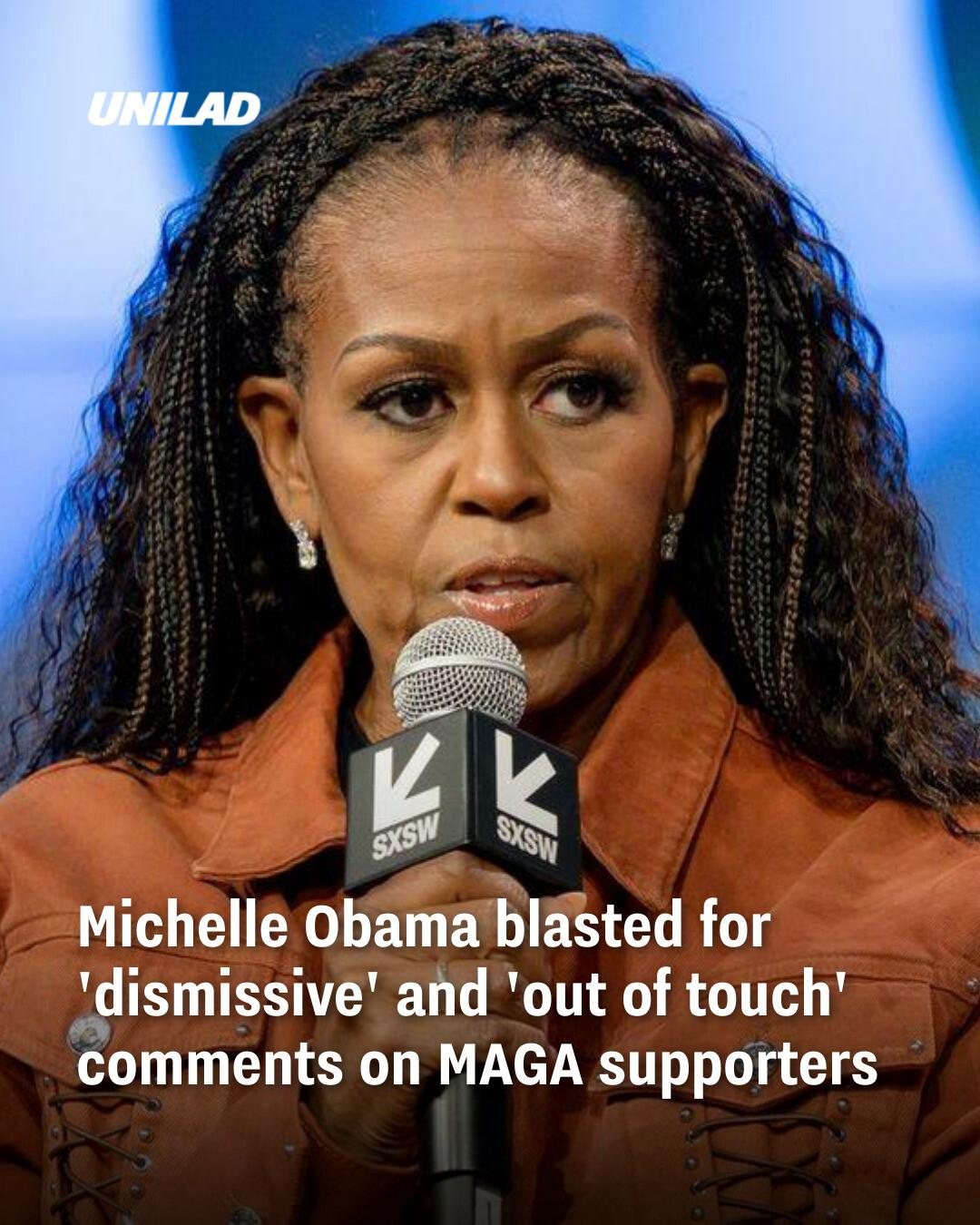
Michelle Obama is facing criticism online after comments she made about supporters of Donald Trump sparked accusations that she was being “dismissive” toward millions of American voters.
The controversy began after Obama appeared on the Talk Easy podcast hosted by Sam Fragoso, where she discussed politics, division in America, and voter behavior following recent elections.
During the conversation, Michelle Obama reportedly suggested that many people who voted for Trump may have done so because “they didn’t know what else to do.”
That remark immediately triggered strong reactions across social media and political commentary circles.
Critics argued the statement sounded:
- Condescending
- Elitist
- Out of touch with working-class Americans
- Dismissive of legitimate political concerns
Supporters, however, defended Obama’s comments, arguing she was attempting to describe frustration, uncertainty, and broader social anxieties rather than insulting voters directly.
Still, the backlash spread quickly.
🎙️ The Podcast Comments That Sparked Debate
Michelle Obama made the remarks during a broader discussion about political polarization and the emotional state of the country.
The former first lady has frequently spoken about:
- Division in America
- Civic engagement
- Democracy
- Empathy
- Political discourse
But this particular phrasing struck a nerve among many conservatives and independent voters.
To critics, saying Trump supporters “didn’t know what else to do” appeared to imply:
- Ignorance
- Confusion
- Lack of political understanding
rather than acknowledging that millions of Americans consciously support Trump’s policies and political agenda.
That interpretation fueled accusations that Democratic elites still misunderstand large portions of the electorate.
🇺🇸 Why Reactions Became So Intense
Donald Trump’s political movement remains deeply emotional and identity-driven for many supporters.
Many MAGA voters view themselves as:
- Ignored by political elites
- Frustrated with establishment politics
- Concerned about immigration
- Angry over inflation
- Worried about cultural change
- Distrustful of media institutions
As a result, comments perceived as dismissive toward their motivations often trigger immediate backlash.
For critics of Michelle Obama’s remarks, the issue wasn’t simply disagreement.
It was the feeling that powerful public figures continue speaking about Trump voters instead of listening to them.
📱 Social Media Erupted Quickly
Online reactions exploded after clips and quotes from the interview began circulating.
Critics accused Obama of:
- Talking down to Americans
- Ignoring economic frustrations
- Misunderstanding rural and working-class voters
- Reinforcing political division
Some users argued the comments reflected broader Democratic messaging problems heading into future elections.
Others claimed statements like these only strengthen Trump politically by reinforcing his long-running argument that elite institutions disrespect his supporters.
Meanwhile, Obama supporters defended her aggressively.
Many argued her comments were being taken out of context or oversimplified online.
❤️ Supporters Say Obama Was Talking About Frustration, Not Intelligence
Defenders of Michelle Obama argued she was not claiming Trump voters were unintelligent.
Instead, they say she was discussing broader emotional and social pressures influencing political choices.
Supporters interpreted the remarks as commentary on:
- Economic anxiety
- Fear of change
- Distrust in institutions
- Political frustration
rather than personal insults.
Some also noted that Michelle Obama has spent years advocating for empathy, civic participation, and respectful dialogue even amid political disagreement.
Still, critics argued the wording itself carried unintended implications regardless of intent.
👩💼 Michelle Obama Remains One of America’s Most Influential Public Figures
Even years after leaving the White House, Michelle Obama continues to command enormous public attention.
As former first lady during Barack Obama’s presidency, she became one of the most recognizable women in the world.
Supporters admire her for:
- Public speaking
- Advocacy work
- Educational initiatives
- Bestselling books
- Personal authenticity
Critics, however, sometimes accuse her of embodying elite political and cultural institutions disconnected from ordinary Americans.
That divide helps explain why even relatively brief comments can generate massive national debate.
🗳️ The Broader Political Context Matters
The controversy also reflects the deeper emotional divide shaping modern American politics.
Supporters of Trump often feel:
- Mocked by mainstream media
- Misrepresented culturally
- Ignored politically
- Dismissed socially
Meanwhile, many Democrats view Trump-era politics as deeply dangerous to democratic norms and social stability.
That mutual distrust has made political conversation increasingly tense and personal.
As a result, even comments that might once have passed quietly now become viral flashpoints instantly.
📉 Democrats Continue Debating How to Speak to Working-Class Voters
The backlash surrounding Obama’s comments also touches on a larger challenge facing Democrats nationally:
how to reconnect with portions of the working-class electorate that shifted toward Trump in recent years.
Many political analysts argue Democrats sometimes struggle to communicate effectively with:
- Rural communities
- Blue-collar workers
- Non-college voters
- Populist-minded independents
Critics say language perceived as overly academic, elitist, or dismissive worsens that disconnect.
Republicans frequently capitalize on these moments politically by portraying Democrats as culturally disconnected from ordinary Americans.
🧠 Political Language Matters More Than Ever
In today’s media environment, even a short phrase can dominate national conversation.
Public figures now operate under constant scrutiny where:
- Podcasts
- Clips
- Headlines
- Social media snippets
spread instantly and often without full context.
That environment makes careful wording increasingly important—especially when discussing politically sensitive topics.
Comments interpreted as disrespectful toward voters rarely stay small online for long.
🇺🇸 Why Trump Support Remains Deeply Personal for Many Voters
One reason reactions become so emotional is because Trump’s political movement often functions as more than standard party affiliation.
For many supporters, it reflects:
- Identity
- Cultural frustration
- Anti-establishment anger
- Patriotism
- Distrust of institutions
As a result, criticisms aimed at Trump voters themselves—not just Trump personally—often feel intensely personal.
That dynamic has shaped American politics for nearly a decade now.
🤝 The Ongoing Challenge of Political Empathy
At the heart of the controversy lies a broader national problem:
Americans increasingly struggle to interpret political disagreement without assuming bad motives.
Many voters feel misunderstood by:
- Politicians
- Media
- Celebrities
- Cultural institutions
That emotional disconnect fuels polarization across both sides of the political spectrum.
Moments like this become symbolic because they reinforce existing narratives people already believe about political opponents.
Final Thoughts
Michelle Obama’s podcast comments may have been intended as a reflection on frustration and uncertainty in modern American politics.
But for many critics, the remarks sounded dismissive toward millions of voters who consciously support Donald Trump and the MAGA movement.
The backlash highlights just how emotionally charged political language has become in America today.
Every phrase gets analyzed.
Every comment becomes symbolic.
And every public figure faces immediate scrutiny from both supporters and critics alike.
Because in modern politics, even a single sentence can instantly become part of a much larger national argument about identity, class, power, and whether Americans truly understand each other anymore.