America at a Crossroads: What Europe’s Cultural Struggles Can Teach the United States
In recent years, debates surrounding immigration, national identity, religion, freedom of speech, and public safety have become some of the most emotionally charged discussions across the Western world. Voices from Europe, particularly from the United Kingdom, have increasingly warned Americans not to repeat what they believe were Europe’s mistakes regarding uncontrolled immigration, cultural fragmentation, and political complacency.
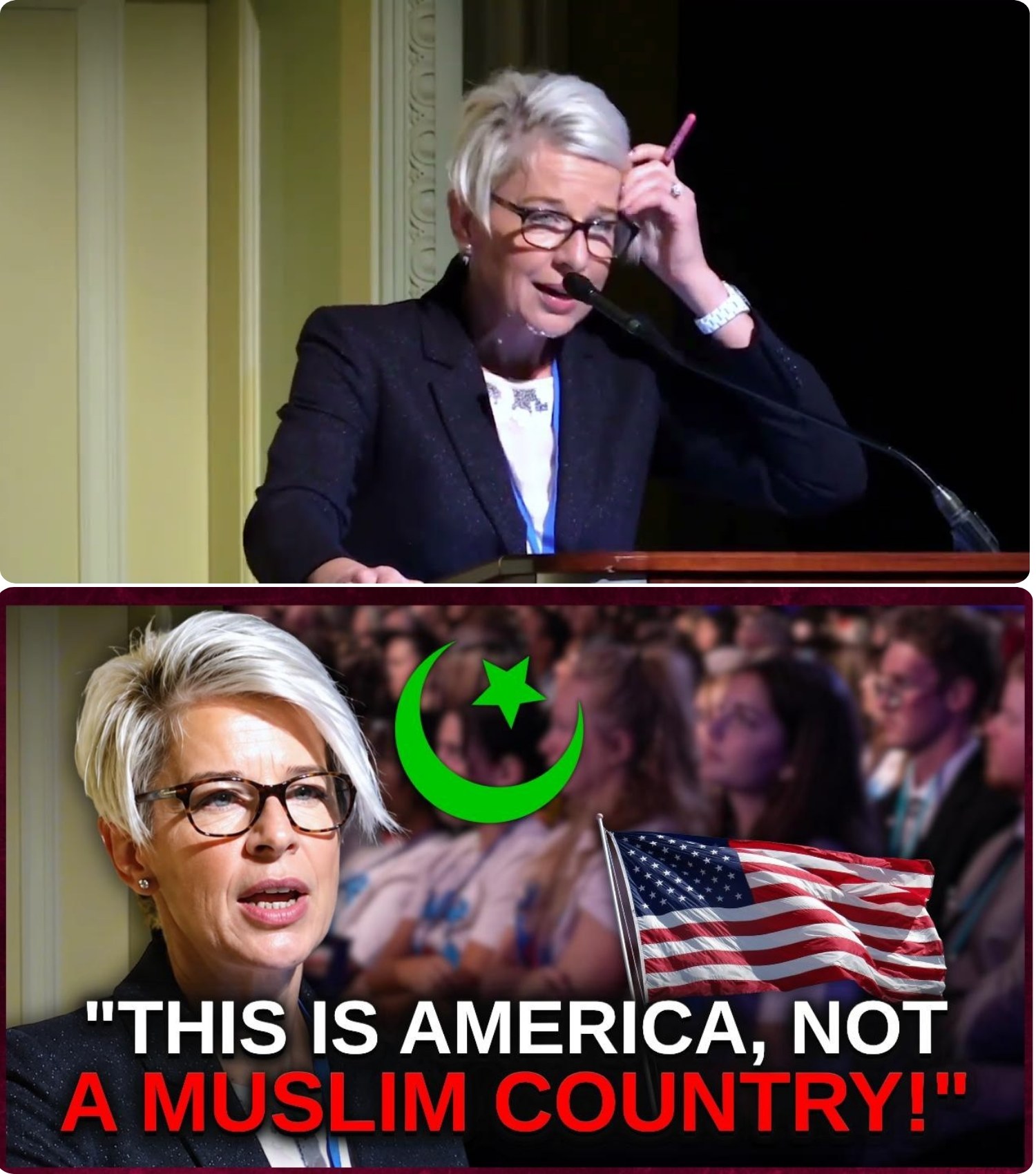
One of the most controversial figures making this argument is Katie Hopkins, a British commentator known for her blunt, provocative, and highly polarizing speeches. In a widely circulated address to an American audience, Hopkins described what she sees as the decline of Britain and warned the United States against following the same path. Her message was emotional, confrontational, and unapologetically political. Yet beyond the rhetoric and controversy lies a broader conversation that millions of people across Europe and America are actively debating.
The core of that debate is simple:
Can a nation preserve freedom, security, and cultural identity while also embracing diversity and mass immigration?
This question sits at the heart of modern Western politics.
The Fear of Cultural Decline
Hopkins framed modern Britain as a country transformed beyond recognition. According to her, many older British citizens no longer recognize the neighborhoods, institutions, or cultural norms they grew up with. She described growing anxiety among ordinary people who feel disconnected from rapid demographic and social changes.
Whether one agrees with her conclusions or not, these fears are not unique to Britain. Similar concerns exist across France, Germany, Sweden, Italy, and increasingly within the United States. Many citizens worry about rising crime, weakening national identity, social polarization, and the erosion of shared values.
Critics of mass immigration argue that governments moved too quickly without ensuring proper integration. They believe political leaders prioritized appearing compassionate over addressing practical challenges such as housing shortages, strained public services, cultural assimilation, and social cohesion.
Supporters of immigration strongly disagree. They argue that immigration enriches societies economically and culturally while helping countries address labor shortages and aging populations. They also point out that immigrants have historically contributed enormously to Western nations, including the United States itself.
The reality is far more complex than either side often admits.
Immigration can strengthen nations when managed effectively. However, rapid demographic change without successful integration can also create social tension. The challenge for modern democracies is finding a balance between openness and stability.
Europe’s Identity Crisis
Europe today faces an identity crisis unlike anything seen since the aftermath of World War II.
For decades, European leaders promoted multiculturalism as a model where many cultures could coexist equally within one society. In theory, the idea emphasized tolerance, diversity, and inclusion. In practice, critics argue that multiculturalism sometimes discouraged assimilation and weakened national unity.
Certain neighborhoods in major European cities have become culturally isolated, with communities operating largely separate from mainstream society. Critics claim this has led to parallel societies where integration is minimal and tensions occasionally escalate.
At the same time, many immigrants themselves face discrimination, economic inequality, and social exclusion, making integration even harder.
This cycle creates resentment on all sides.
Hopkins and others on the political right argue that Europe ignored warning signs for too long. They point to terrorism, gang violence, religious extremism, and anti-Western sentiment among small radicalized groups as evidence that integration policies failed.
However, critics of Hopkins accuse her of exaggeration and fearmongering. They argue that she unfairly generalizes entire communities based on the actions of extremists. Many also note that Muslims in Britain and Europe are overwhelmingly peaceful citizens who contribute positively to society.
This tension between legitimate security concerns and the risk of demonizing entire groups remains one of the defining political struggles of our era.
Freedom of Speech Under Pressure
Another major theme in Hopkins’ speech was freedom of expression.
She claimed that speaking openly about immigration, religion, or crime in Britain can lead to accusations of racism, hate speech, or extremism. According to her, people increasingly self-censor out of fear of social backlash, job loss, or legal consequences.
This debate extends far beyond Britain.
Across the Western world, arguments over “cancel culture,” censorship, online moderation, and political correctness dominate public discourse. Conservatives often claim that mainstream institutions suppress dissenting opinions, especially on issues related to immigration, gender, religion, and nationalism.
Progressives counter that restrictions on hate speech are necessary to protect vulnerable communities from discrimination and incitement.
The challenge is determining where free speech ends and harmful rhetoric begins.
Liberal democracies depend on open debate. Yet societies also have an obligation to prevent violence and protect minorities. Balancing those priorities has become increasingly difficult in the age of social media, where outrage spreads instantly and nuanced discussion often disappears.
Hopkins positioned herself as someone persecuted for speaking uncomfortable truths. Her supporters view her as courageous. Her critics view her as intentionally inflammatory.
Regardless of opinion, her popularity reflects a growing frustration among people who believe their concerns are dismissed by political and media elites.
The Rise of Populism
The emotional power behind speeches like Hopkins’ is closely connected to the rise of populism throughout Europe and America.
Populist movements typically emerge when large groups of citizens feel ignored, economically insecure, culturally displaced, or politically powerless. They often reject establishment politics and promise to restore national pride, border control, and traditional values.
Brexit in the United Kingdom became one of the clearest examples of this trend. Many voters supported leaving the European Union because they believed Britain had lost control over immigration, laws, and national sovereignty.
Similarly, the rise of Donald Trump in the United States reflected dissatisfaction with globalization, political elites, and establishment institutions.
Hopkins openly praised Trump during her speech, portraying him as a fighter against political correctness and globalist ideology.
To supporters, populist leaders represent ordinary citizens fighting back against disconnected elites.
To critics, populism often oversimplifies complex problems while fueling division, nationalism, and hostility toward minorities.
Yet populism continues growing because many people genuinely feel unheard.
Economic inequality, rising living costs, cultural uncertainty, and distrust in institutions have created fertile ground for emotionally powerful political messaging.
America’s Unique National Identity
A major argument presented in the speech was that America is fundamentally different from Europe.
The speaker emphasized America’s founding principles: freedom, opportunity, individual rights, religious liberty, and constitutional government. According to this perspective, America succeeded because it embraced personal liberty while remaining rooted in moral and spiritual foundations.
There is truth to the idea that the United States developed differently from Europe.
America was built largely through immigration and frontier expansion rather than centuries of monarchy, rigid class systems, or ethnic nationalism. The American identity traditionally centered less on ancestry and more on shared ideals such as liberty, democracy, and opportunity.
That identity has allowed immigrants from countless backgrounds to become part of the American story.
At the same time, American history also includes slavery, segregation, discrimination, and conflict over immigration. The country has repeatedly struggled to define who truly belongs and what it means to be American.
Today, those debates continue.
Some Americans believe the country is losing its traditional values and cultural cohesion. Others believe America’s diversity is precisely what makes it strong.
The challenge moving forward is preserving national unity without abandoning pluralism and freedom.
Religion and the American Experiment
Another central theme in the speech was the belief that America’s success came from its relationship with faith and biblical values.
Religion has undeniably played a major role in American history. The language of faith influenced many early political leaders and shaped aspects of American culture, law, and morality.
Phrases like “In God We Trust” and references to God in political speeches remain deeply woven into national identity.
For many conservatives, America’s moral decline is connected to declining religious influence. They argue that secularism has weakened families, communities, and ethical foundations.
Others strongly disagree.
Critics argue that America’s strength comes not from one religion but from constitutional protections that allow religious freedom for everyone. They emphasize that democracy works best when government remains neutral toward religion while protecting individual rights.
This debate reflects a broader cultural divide about morality, tradition, and the future direction of society.
Immigration: Opportunity and Responsibility
One of the most important points raised in the speech concerns assimilation.
The speaker argued that immigrants should respect the laws, values, and culture of the country they enter. This belief resonates with many Americans across the political spectrum.
Historically, immigrants to the United States often adapted to American customs while also contributing elements of their own cultures. Over time, this process helped shape the uniquely diverse identity of America.
However, modern immigration debates are more complicated because migration today occurs on a much larger scale and in a highly polarized political environment.
Supporters of stronger border policies argue that uncontrolled migration strains infrastructure, lowers wages in some sectors, and creates security concerns.
Supporters of more open immigration policies argue that immigrants drive innovation, economic growth, and entrepreneurship while revitalizing communities.
Both sides often contain valid concerns.
Successful immigration systems require secure borders, legal pathways, fair enforcement, and effective integration policies. Nations need both compassion and structure.
Without structure, chaos emerges.
Without compassion, humanity suffers.
Media, Fear, and Political Narratives
The modern media environment intensifies every cultural conflict.
Social media platforms reward outrage because outrage generates clicks, views, and engagement. Politicians, influencers, and commentators often gain attention by presenting the world in dramatic, apocalyptic terms.
Hopkins’ speech follows this pattern closely.
Her message portrays Britain as collapsing and America as standing at the edge of disaster. This style of communication is emotionally compelling because fear motivates people more strongly than calm analysis.
However, fear-based narratives can also distort reality.
Britain is not collapsing into civil war. America is not on the verge of immediate societal destruction. At the same time, concerns about social fragmentation, political extremism, crime, and cultural conflict are not entirely imaginary either.
Healthy societies must confront real problems honestly without falling into paranoia or hatred.
That balance is difficult to maintain in a digital age dominated by sensationalism.
The Importance of Critical Thinking
When listening to emotionally charged speeches, critical thinking becomes essential.
Some claims in political speeches are factual. Others are exaggerated, selectively framed, or lacking context. Audiences should examine evidence carefully before accepting broad conclusions about entire nations, religions, or communities.
For example, terrorism and extremist violence are genuine threats. Yet the overwhelming majority of Muslims in Western countries are law-abiding citizens who reject extremism entirely.
Similarly, concerns about immigration policy can be legitimate without automatically justifying hostility toward immigrants themselves.
Public debate becomes dangerous when people stop distinguishing between individuals and entire groups.
Democracy requires citizens capable of discussing difficult topics rationally rather than emotionally reacting to fear or propaganda.
Lessons America Can Learn from Europe
Despite the controversy surrounding speeches like this one, there are still meaningful lessons America can learn from Europe’s experiences.
1. Integration Matters
Immigration policies should prioritize integration, language acquisition, employment, civic participation, and shared national identity.
A country functions best when people from different backgrounds still feel connected by common values and responsibilities.
2. Open Debate Is Necessary
Suppressing public concerns rarely makes them disappear. People need space to discuss immigration, crime, religion, and national identity honestly without immediate accusations or censorship.
At the same time, debate should remain respectful and evidence-based.
3. Extremism Must Be Rejected
Religious extremism, political violence, racism, and hate should be opposed consistently regardless of ideology.
Selective outrage only deepens division.
4. National Identity Still Matters
People naturally want belonging, continuity, and cultural stability. Ignoring those emotional needs creates resentment and polarization.
Strong nations usually possess a shared civic identity that unites citizens despite differences.
5. Fear Alone Cannot Build a Future
While warnings about social decline attract attention, fear by itself cannot create solutions.
Nations need constructive leadership, practical policy, economic opportunity, education, and social trust.
The Future of the West
The deeper issue beneath this entire conversation is the future of Western civilization itself.
Can democratic societies remain stable in an era of rapid migration, technological disruption, declining trust, political polarization, and cultural fragmentation?
Can freedom survive without shared values?
Can diversity flourish without national unity?
Can security coexist with liberty?
These are difficult questions with no easy answers.
What is clear is that many people across Europe and America feel uncertain about the future. They worry about losing control over their societies, identities, and institutions. Politicians and commentators like Katie Hopkins channel those anxieties into emotionally powerful messages.
Some see those messages as necessary warnings.
Others see them as dangerous fearmongering.
Most likely, reality exists somewhere between those extremes.
Conclusion
The speech delivered by Katie Hopkins reflects a broader wave of frustration spreading across many Western democracies. Concerns about immigration, cultural identity, freedom of speech, crime, and political correctness have become central issues shaping modern politics.
At the same time, emotionally charged rhetoric can deepen division when it paints entire communities as threats or frames complex social issues in simplistic terms.
America does not need to become Europe, nor should Europe be reduced to a caricature of collapse. Every nation faces unique historical, cultural, and political circumstances.
The real challenge for the United States is not choosing between openness and security, diversity and unity, or freedom and responsibility.
The challenge is learning how to preserve all of them simultaneously.
America’s future will depend not only on border policies or political movements, but also on whether citizens can maintain social trust, protect democratic values, encourage honest debate, and resist the temptation to let fear replace wisdom.
The strongest societies are not built solely on anger or nostalgia. They are built on confidence, accountability, shared purpose, and the ability to adapt without losing their core principles.
As the world changes rapidly, America — like every democracy — must decide what kind of nation it wants to become.
And that decision will shape far more than politics alone.