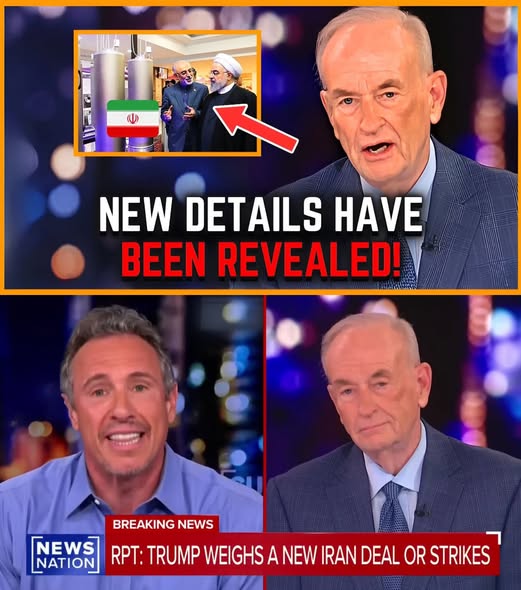
“I’ll put 100,000 dollars on this proposition.” The studio air instantly turned to ice. This wasn’t a standard, polished cable news debate—it was an ideological bloodbath over a looming American military strike, a ghost from the Iraq War, and a terrifying five-day countdown that could alter the global landscape forever.
Behind closed doors, the machinery of war is shifting gears. While everyday citizens worry about domestic affordability, healthcare, and an unstable economy, a volatile geopolitical chessboard is being set. On one side, the Trump administration stands poised for a potential military strike against Iran. On the other, a sudden, cynical chess move has targeted Cuba with an arrest warrant for Raúl Castro.
But as the drums of war beat louder, a fiery, unscripted clash between two veteran commentators exposed a deeper, more disturbing reality: Is the American public being guided by genuine intelligence, or are they being manipulated by a highly calculated political distraction?
The Shadow of Iraq and a $100,000 Ultimatum
The debate erupted into chaos when the conversation shifted to whether U.S. intelligence could truly be trusted regarding Iran’s nuclear capabilities. One commentator admitted he bought into the infamous “Weapons of Mass Destruction” narrative in 2002, blaming the failure on a front-page New York Times leak originating from Saddam Hussein’s own deceived generals.
His opponent, completely losing his patience, fired back with a venomous reality check.
“That’s not what happened. The Bush administration lied… It didn’t come through the New York Times. It came through the Bush administration.”
The argument escalated into an extraordinary high-stakes challenge:
-
The $10,000 Dare: A wager thrown out to prove where the WMD lie truly originated.
-
The $100,000 Counter-Offer: A furious escalation, betting a massive fortune that the Bush administration completely fabricated the intelligence, ruined the career of Colin Powell, and engineered a catastrophic war of choice.
The broader warning was unmistakable: the exact same playbook is being deployed against Iran today.
The Irreconcilable Chasm
As the clock ticks down toward a looming deadline, the United States and Iran find themselves locked in a fundamental clash of interests. The diplomatic gap between the two nations isn’t a minor technical disagreement; it is an ideological canyon.
| What the United States Demands | What Iran Demands |
| Complete Nuclear Surrender: No high-level uranium enrichment and handing over existing stockpiles. | Sanctions Relief: Immediate access to billions in frozen funds and the freedom to sell oil globally. |
| Missile Defangment: A severe scaling back of Iran’s regional ballistic missile program. | Security Guarantees: Ironclad protection from future U.S. or Israeli military strikes. |
| Proxy Starvation: Ending all financial and military support for Hezbollah, Hamas, and the Houthis. | Financial Compensation: Direct monetary payback for damages already inflicted by U.S. actions. |
This extreme polarization explains why recent secret negotiations collapsed entirely. Iran refuses to yield its core instruments of regional deterrence, while the U.S. refuses to blink. Compounding the danger, Iran’s current leadership structure is highly unstable, leaving Western intelligence agencies highly uncertain about who actually holds the absolute authority to sign a binding contract.
A War of Choice
“Can’t back down,” one commentator remarked, invoking Tom Petty to describe the President’s rigid stance. But his colleague sharply corrected the analogy: Petty sang about standing your ground against a bully. In this scenario, nobody pushed the administration into a corner. This was a crisis sought out—a war of choice designed for maximum political leverage.
With a massive military strike heavily rumored to execute within days, the true purpose of this high-stakes brinkmanship is unmasked. The five-day window isn’t actually about peace or diplomacy. It is a ruthless exercise in geopolitical positioning, a gamble for leverage, and a desperate race to control the narrative before the missiles fly.