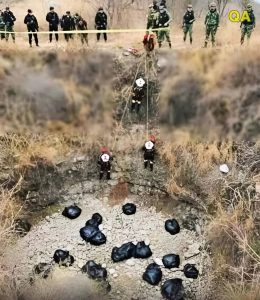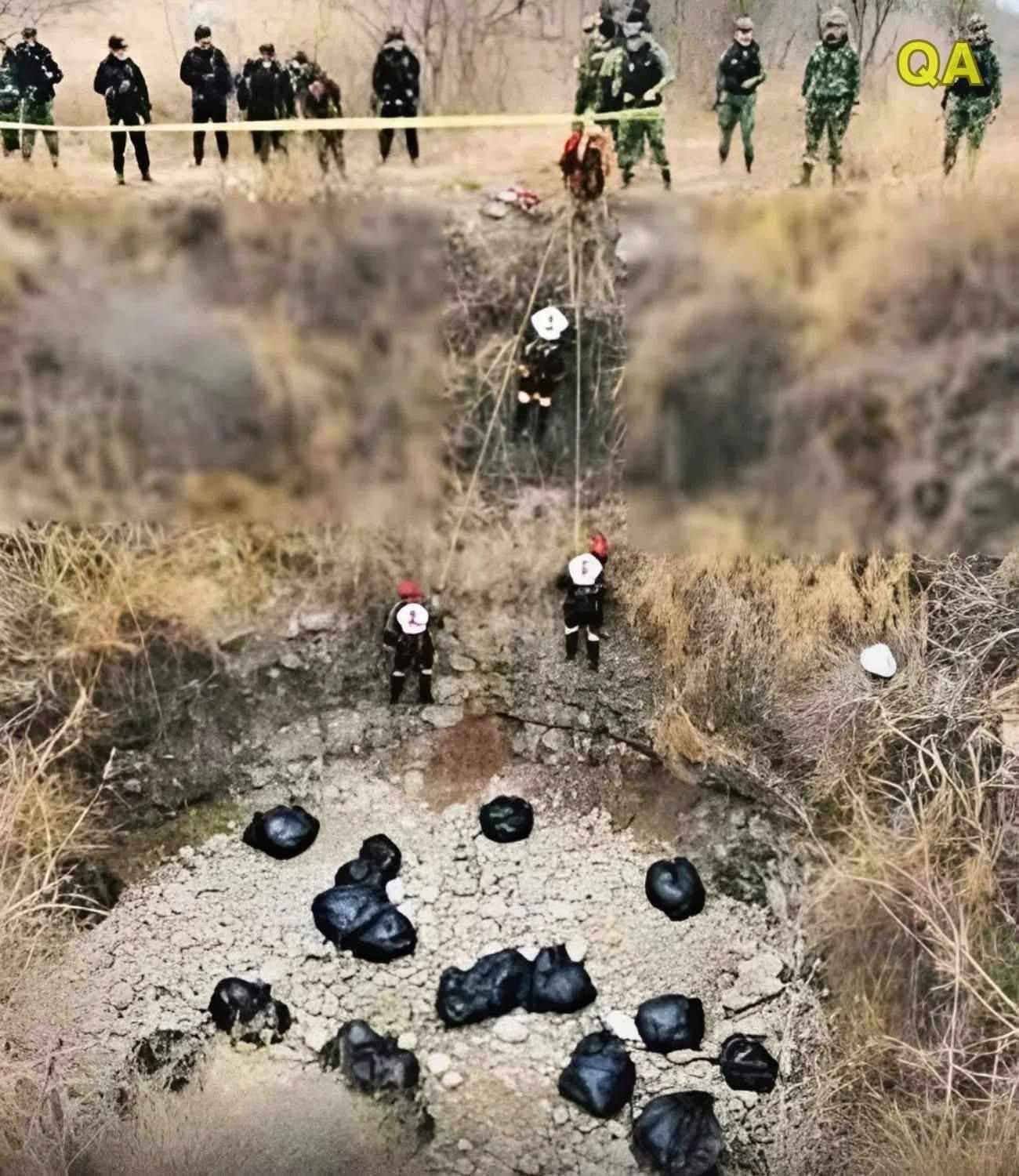
**Rural Jalisco, Mexico – May 2026** – In a discovery that has sent shockwaves through the nation and beyond, authorities recovered at least 27 bodies stuffed into heavy black plastic bags from the depths of an old, abandoned well on a remote property. The gruesome find, made during a routine water rights inspection, has authorities investigating what appears to be one of the most disturbing mass disposal sites linked to organized crime in recent years.
The well, located on a disused ranch about 40 kilometers outside Guadalajara in Jalisco state, had been sealed with concrete and overgrown with vegetation for years. When a team from the state water commission began drilling to assess its condition, the stench alone alerted workers that something was terribly wrong. What they uncovered would haunt them forever.
Forensic teams, wearing hazmat suits, spent three days carefully extracting the bags using cranes and specialized equipment. Many of the victims had been dismembered, their remains crammed into multiple bags per person. Preliminary autopsies suggest the bodies include both men and women, ranging in age from late teens to middle age. Identification has proven difficult due to advanced decomposition and the use of lime and other chemicals intended to accelerate breakdown.
“This is not just a crime scene — it’s a nightmare,” said State Prosecutor Elena Vargas during a tense press conference. “The level of organization required to dispose of this many victims points to cartel activity. We are treating this as a multiple homicide investigation with possible links to larger criminal networks operating in the region.”
### The Discovery That Changed Everything
The ranch had been abandoned since the early 2020s following a series of violent incidents in the area. Local residents long avoided the property, whispering about strange nighttime activity and trucks arriving under cover of darkness. One elderly farmer, who wished to remain anonymous, told reporters: “We heard stories about people going in but never coming out. But no one wanted to ask questions. Asking questions gets you killed around here.”
The well itself is over 30 meters deep, with a narrow opening that made recovery operations technically challenging. Divers and robotic cameras were eventually deployed to ensure no remains were left behind. Officials confirmed they recovered 27 bodies but fear the total could rise as further excavation continues on the surrounding land. At least four additional shallow graves have already been located nearby.
Forensic experts from Mexico’s National Human Rights Commission and international advisors are assisting with DNA analysis. Personal items found with the remains — including jewelry, clothing fragments, and a few identification cards — suggest some victims may have been migrants or local residents who ran afoul of criminal groups.
### A Region Plagued by Violence
Jalisco has long been a hotspot for cartel warfare, particularly involving the powerful Jalisco New Generation Cartel (CJNG). The state has seen numerous mass graves and clandestine burial sites over the past decade. This latest discovery echoes a 2019 case in the same region where over 40 bodies were found stuffed into bags and buried in a similar well.
Experts believe these sites serve a dual purpose: body disposal and psychological terror. “Cartels use these macabre displays to send messages,” said Dr. Miguel Torres, a criminologist at the University of Guadalajara. “The choice of a well — a source of life turned into a tomb — carries symbolic weight. It’s about dominating territory and instilling fear in the community.”
Families across Mexico are once again left wondering if their missing loved ones might be among the victims. The country currently has over 100,000 missing persons cases, many linked to organized crime. Advocacy groups like *Buscadoras por la Paz* (Searchers for Peace) have mobilized, demanding faster identification and justice.
One mother, Rosa Hernandez, traveled from Michoacán after hearing reports. Her son disappeared in 2024 while working as a truck driver. “Every time they find bodies, my heart stops,” she said, clutching a photo of her missing child. “I pray it’s not him, but I need to know. The uncertainty is its own kind of death.”
### Investigation and Potential Breakthroughs
Authorities have arrested two individuals connected to the property — a caretaker and a former tenant — though both deny knowledge of the well’s contents. Digital forensics on phones and financial records are underway, with hopes they will lead to higher-level operatives.
The use of black bags is a common signature in cartel disposals, designed to contain fluids and facilitate transport. Chemical analysis of the bags and remains may reveal timelines, helping match victims to missing persons reports from the past five years.
Federal forces have increased patrols in the area, fearing retaliation or attempts to destroy evidence. The Mexican government has promised full resources, with President Claudia Sheinbaum addressing the nation: “We will not rest until every victim is identified and every perpetrator is brought to justice. These acts of barbarity have no place in modern Mexico.”
### The Human Cost and Broader Implications
Beyond the immediate horror lies a deeper tragedy. Many victims were likely low-level rivals, extortion targets, or innocent bystanders caught in turf wars. Others may have been migrants heading north, preyed upon by criminal groups controlling smuggling routes.
Psychologists warn of collective trauma in affected communities. “Finding bodies in a well evokes primal fears,” said trauma specialist Dr. Ana Morales. “It’s not just about death — it’s about desecration and erasure. Families lose closure when remains are treated this way.”
This case has drawn international attention, with human rights organizations calling for independent oversight. The United Nations has offered technical assistance in forensic anthropology, a field critical for identifying badly decomposed remains.
For the workers who made the discovery, the images remain seared in their minds. One crew member required immediate counseling after glimpsing the first bags. “I have grandchildren,” he said quietly. “I keep thinking about their futures in a world where this can happen.”
### A Call for Change
As the investigation unfolds, questions arise about systemic failures. Corruption, underfunding of law enforcement, and the overwhelming power of cartels have allowed such atrocities to persist. Advocacy groups demand better protection for searchers and families, as well as reforms to address root causes like poverty and weak institutions.
In the days since the discovery, candlelight vigils have sprung up across Jalisco and neighboring states. Messages of solidarity and demands for justice fill social media under hashtags like #NoMasFosas and #IdentidadParaLasVictimas.
The well itself will likely be fully excavated and then sealed permanently — a grim monument to lives cut short. But for the families still searching, hope remains a fragile thing. Each new body recovered is both a potential answer and a devastating confirmation.
This chilling find serves as a stark reminder that beneath the surface of everyday life in regions plagued by organized crime, horrors often lie waiting to be uncovered. As forensic teams continue their solemn work, the people of Mexico demand not just answers, but an end to the cycle of violence that fills wells with bodies and hearts with grief.
The investigation remains active. Authorities urge anyone with information to come forward anonymously. For now, a rural well in Jalisco holds the remains of at least 27 souls — silent witnesses to brutality in a country still fighting for peace.