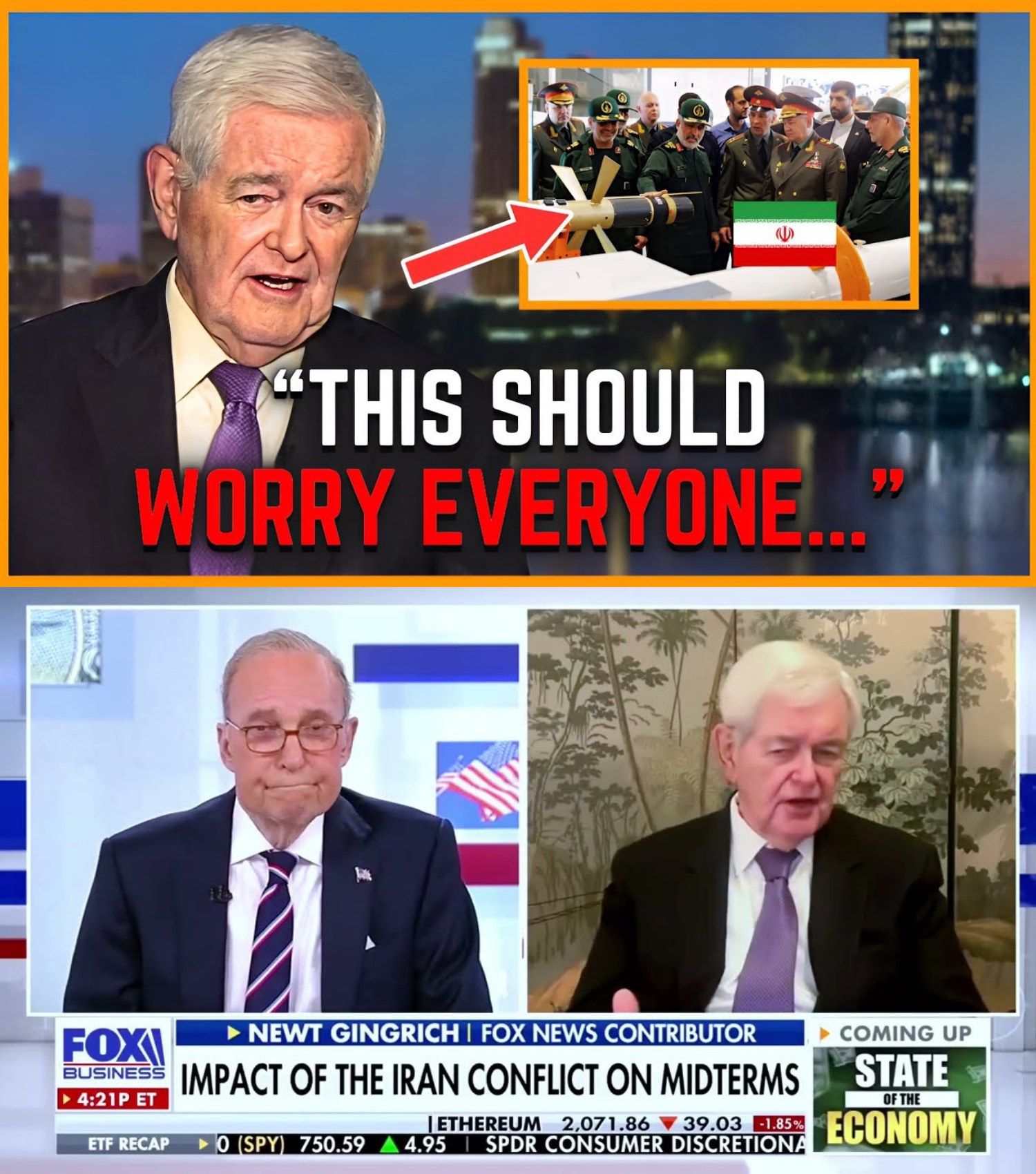
“The Iranian d/1/c.t/@/t.0.r.s.h.i.p is the equivalent of Nazi Germany. And right now, time is entirely on their side.”
The quiet waters of the Caspian Sea have quietly transformed into a high-stakes pipeline for a massive, covert military resurrection. While Western diplomats congratulate themselves on achieving a temporary “truce” in the Middle East, intelligence reports indicate that the Iranian regime is exploiting the boardroom pause to aggressively rebuild its war machine in direct coordination with Russia.
As gasoline prices tick toward a politically catastrophic $5.00 a gallon ahead of the fall elections, Washington finds itself entirely trapped between the demands of timid coalition partners and a devastating civilizational reality: America is being handled by a masterclass in diplomatic stalling.
The Mirage of the Truce
To the average consumer watching energy prices spike, the conflict feels like a series of distant, geopolitical headlines. But inside the halls of power, former House Speaker Newt Gingrich delivered a blistering reality check, warning that Western analysts don’t have a single clue about the fanatical adversary they are truly up against.
The regime in Tehran is not a corporate entity that can be enticed by standard economic incentives or financial compromise. This is a religiously inspired dictatorship that willingly sustained a million casualties during its eight-year war with Iraq, and cold-bloodedly massacred an estimated 45,000 of its own citizens just to maintain its absolute grip on power.
While Washington celebrates a theatrical pause in hostilities, the reality on the ground is far darker…
Every day that American forces hesitate to enforce their red lines, the Caspian conduit remains wide open. The regime is systematically refortifying its positions, banking on the fact that Western leaders lack the stomach for prolonged kinetic friction.
The Council of Timidity
The core vulnerability of the current White House strategy lies in its absolute dependence on a fragile regional coalition. While President Trump has successfully assembled a massive security bloc utilizing the framework of the Abraham Accords, his boardroom approach is currently being paralyzed by the weakest members of the alliance.
Leaked intelligence indicates that the Saudi government, terrified of the regime’s capability to unleash a decade’s worth of structural devastation on their domestic oil fields, is quietly pleading with Washington to keep the gloves on.
But history teaches that letting the most defensive members of a coalition dictate military policy is a direct route to strategic paralysis. General Douglas MacArthur famously observed that councils of war are almost always councils of timidity. By allowing the fear of speculative energy markets to freeze its decision-making, the administration is granting the ideological dictatorship the exact asset it desperately needs to cross the nuclear threshold: time.
The “Save Our Cities” Spectrum
The domestic stakes of this hesitation are monumental. If the administration allows the current stalling campaign to drag into the late summer, the psychological and economic fallout will be devastating. Analysts warn that if fuel prices remain uncontainable by Labor Day, a massive political realignment will occur, effectively freezing the administration’s domestic agenda for the next two years.
To break the diplomatic stalemate, experts argue that the White House must shift the narrative away from a dry debate over corporate spreadsheets and elevate it to a stark question of national survival.
“They could put together a ‘Save Our Cities’ campaign and have a rally in every major American city,” Gingrich proposed. “Say, ‘Look, the people who chant Death to America… they want to take out Chicago. We think it’s worth doing whatever is necessary for Chicago to live. Now, you decide: are you with the weaklings who are willing to risk Chicago, or are you with the people who want to protect it?’”
The Afghan Blueprint
Defeating a religiously motivated network of 160,000 Iranian Revolutionary Guard members cannot be achieved through a simple, high-tech decapitation strike. The infrastructure of terror runs too deep. Instead, the smartest military path forward requires Washington to completely cut the Gordian knot by separating the conflict into two distinct phases.
First, America must deploy its full, unyielding naval and air assets to permanently secure the Persian Gulf and the Strait of Hormuz, instantly collapsing the speculative bubble driving global oil prices. Once the international energy market stabilizes and the regime’s primary financial pipeline is cut, the United States can execute a highly effective, long-term proxy strategy modeled directly after the Afghan blueprint of the 1980s.
By providing robust coordination, advanced training, and heavy weaponry directly to the dissident Iranian population, the West can systematically dismantle the regime from the inside out over a three-to-four-year window—without placing a single American boot on the ground.
True diplomacy in the Middle East has only ever succeeded when backed by the immediate, credible threat of overwhelming military power. Peace is never realized by pretending that an aggressive, expansionist dictatorship can be negotiated into moderation. Real, lasting stability is only achieved when the forces of civilization possess the moral clarity to stop talking, enforce their boundaries, and strip the architects of chaos of their ability to threaten the world.